I saw this book in Borders today and I think I need it. I am most certainly going to be left behind, so I better be prepared.
Thursday, December 18, 2008
Be prepared
I saw this book in Borders today and I think I need it. I am most certainly going to be left behind, so I better be prepared.
Monday, December 15, 2008
Data Don't Lie III
Good thing Jack was born in April...

Data from ESPN.com's interview with Malcolm Gladwell, author of Outliers: The Story of Success. (R2 = 0.75, p=0.0003)

Data from ESPN.com's interview with Malcolm Gladwell, author of Outliers: The Story of Success. (R2 = 0.75, p=0.0003)
Friday, December 05, 2008
Friday Dial Stopper - Junior Parrothead Edition
Speaking of pirates...This week's dial stopper is in honor of one of Emma's and Jack's new favorite songs. (I wonder who could have possibly introduced them to this music...)
Pirates = Shrewd Businessmen
See, pirates aren't barbaric, bloodthirsty villains, they're rational folks trying to make a living, just like everyone else. Now, if you want to talk about bloodthirsty, let's talk about the medical insurance industry.
Wednesday, December 03, 2008
Five Things
Alex over at Myrmecos Blog tagged me, so I'm "it":
5 Things I Was Doing 10 Years Ago:
5 Things On My To-Do List Today:
5 Snacks I Love:
5 Things I’d do if I was a Millionaire:
5 Places I've Lived:
5 Jobs I've Had:
And now I tag Linda, Sarah, Kathy, Miriam, and Emile.
5 Things I Was Doing 10 Years Ago:
- Celebrating my 4-month wedding anniversary
- Attending Quad City Mallards games
- Passing my comprehensive exam (for the PhD I decided not to get)
- Planning my next fieldtrip to Baja (for the PhD I decided not to get)
- Reading century-old manuscripts by C.V. Riley on the pollination of yuccas by yucca moths (ditto)
5 Things On My To-Do List Today:
- Grade a stack of freshman lab reports on cellular respiration
- Take Emma out to lunch
- Pick out a Christmas tree
- Grill up some nice sirloin steaks for dinner
- Meet with Emma's 2nd grade teacher during parent-teacher night
5 Snacks I Love:
- chips and salsa
- chocolate-covered pretzels
- honey-roasted peanuts
- buffalo wings
- prosciutto
5 Things I’d do if I was a Millionaire:
- acquire a vessel
- take a long vacation in Italy
- buy Linda that new ring she wants
- purchase some acres in Maine or on Cape Cod
- add to Emma's and Jack's college fund
5 Places I've Lived:
- Shrewsbury, MA
- Brunswick, ME
- Iowa City, IA
- Cranston, RI
- Polacca, AZ
5 Jobs I've Had:
- record store clerk
- Cutco knife salesman
- Marine Research Specialist (fancy name for "lab tech")
- stay-at-home dad
- high school science teacher (I lasted 1 semester!)
And now I tag Linda, Sarah, Kathy, Miriam, and Emile.
Tuesday, December 02, 2008
Just in case you didn't know...

I saw Ken Miller give a talk today at the BioNES meeting held today at RWU and he showed this bumper sticker (available here) while talking about the downfall of Intelligent Design.
Monday, November 24, 2008
Ravenous curiosity
As usual, Dale over at The Meming of Life hits the nail on the head in his recent post, this time on the parenting philosophy of promoting "ravenous curiosity". His post comes as the perfect follow-up to my kids' "frozen ocean" experiment. I have to admit too that I really enjoyed this bit of snarkiness:
It’s not that religion is inherently incurious. Religion and science are both planted in the cortical freakishness that demands answers. It’s just that religion wants the answers it wants, while science wants the answers that are in the answer key. Also known as “the actual answers."
Friday, November 21, 2008
Kid Science : Frozen Ocean
A couple of weeks ago, I was in the car with my kids - Emma, 7, and Jack, 4 - when the subject of water freezing came up. I think it was the first day of the season when we had sub-freezing temperatures and I was trying to impress upon them the importance of making sure they had their hats and gloves. During this conversation, one of them (I think it was Jack) asked if the ocean ever froze. I told them that it did on very cold places like the Arctic and Antarctica, but that around here it did not generally freeze because the salt in the water prevented it (As much as may have wanted to, I didn't go into the physics of molecular motion and ice crystal formation - I'll save that for when they're a few months older!).
A light bulb went off in Emma's head - it was an amazing thing to witness. "I know what we can do! Let's put a container of water without salt and another container of water with salt outside and see if they freeze!" I can't explain how proud I was at that moment. Notice that Emma did not just want to put a container of salt water outside and see what would happen. She wanted to put both salt water and fresh water out - she had just designed a simple controlled experiment. I was smiling all the way to work that day.
The weather warmed up for a bit after that conversation, so we had to wait until yesterday to carry out Emma's experiment. After dinner, we pulled out a couple of bowls, a measuring cup, a kitchen scale, and some table salt.
I was trying to keep everything as accurate as I could so we added 500mL of tap water to each bowl and added approximately 17.5g of salt to one of them (this gives a salinity of 3.5% or 35 ppt, the average salinity of ocean surface waters, and only slightly higher than the salinity we would expect for the ocean off of New England). I asked the kids what else we needed to do and Emma realized that we needed some way to identify each bowl. She had some trouble coming up with a good system. Jack, of course, figured it out - "Emma, we just need to write 'salt' and 'no salt' on a piece of paper and tape it to the bowls."

The kids put the bowls outside on the back deck and went off to bed. I watched the temperature outside drop through the evening: 30oF, 28oF, 25oF, 23oF, 20oF. Uh oh. I hadn't anticipated such a cold night. Salt water doesn't freeze at 32oF, but it will freeze - especially sitting there in a little bowl without currents or waves - in fact, water with a salinity of 35ppt will freeze at 28.8oF. The reason the ocean as a whole doesn't freeze even when it's sub-28.8oF outside is that it has such a huge thermal mass that the water itself doesn't often get to 28.8oF. You'll see some freezing in shallow areas with little wave activity, like along the edges of tidal marshes. I was starting to fear that our little controlled scientific experiment was going to backfire and we would wake up to two frozen bowls of water and the kids would logically conclude that the salt did nothing to prevent freezing. D'oh!
When I went to bed sometime around midnight, the temperature outside was 18.8oF. Should I bring the bowl of salt water inside and then wake up before the kids, run downstairs, and put it back outside? No. That's just too deceitful and is completely counter to the lesson I was trying to teach about scientific thinking. I'll just hope for the best - perhaps the salt water wouldn't freeze as much as the fresh water. I went to bed hoping for a watery slush.
When we brought the bowls in this morning, sure enough the salt water had froze. But thankfully, like I had hoped, it was different from the fresh water. The fresh water was frozen solid, smooth like a hockey rink. The salt water was slushy, not firm at all. The kids marvelled at the difference. They banged their knuckles on the hard fresh water ice and stuck their fingers through the salt water slush. "Wow, the salt water isn't really frozen!". They played with, touched, and tasted the ices for a few minutes then headed off to get dressed for the day. Whew. To paraphrase a cogent comic - Science. It works.


A light bulb went off in Emma's head - it was an amazing thing to witness. "I know what we can do! Let's put a container of water without salt and another container of water with salt outside and see if they freeze!" I can't explain how proud I was at that moment. Notice that Emma did not just want to put a container of salt water outside and see what would happen. She wanted to put both salt water and fresh water out - she had just designed a simple controlled experiment. I was smiling all the way to work that day.
The weather warmed up for a bit after that conversation, so we had to wait until yesterday to carry out Emma's experiment. After dinner, we pulled out a couple of bowls, a measuring cup, a kitchen scale, and some table salt.
I was trying to keep everything as accurate as I could so we added 500mL of tap water to each bowl and added approximately 17.5g of salt to one of them (this gives a salinity of 3.5% or 35 ppt, the average salinity of ocean surface waters, and only slightly higher than the salinity we would expect for the ocean off of New England). I asked the kids what else we needed to do and Emma realized that we needed some way to identify each bowl. She had some trouble coming up with a good system. Jack, of course, figured it out - "Emma, we just need to write 'salt' and 'no salt' on a piece of paper and tape it to the bowls."

The kids put the bowls outside on the back deck and went off to bed. I watched the temperature outside drop through the evening: 30oF, 28oF, 25oF, 23oF, 20oF. Uh oh. I hadn't anticipated such a cold night. Salt water doesn't freeze at 32oF, but it will freeze - especially sitting there in a little bowl without currents or waves - in fact, water with a salinity of 35ppt will freeze at 28.8oF. The reason the ocean as a whole doesn't freeze even when it's sub-28.8oF outside is that it has such a huge thermal mass that the water itself doesn't often get to 28.8oF. You'll see some freezing in shallow areas with little wave activity, like along the edges of tidal marshes. I was starting to fear that our little controlled scientific experiment was going to backfire and we would wake up to two frozen bowls of water and the kids would logically conclude that the salt did nothing to prevent freezing. D'oh!
When I went to bed sometime around midnight, the temperature outside was 18.8oF. Should I bring the bowl of salt water inside and then wake up before the kids, run downstairs, and put it back outside? No. That's just too deceitful and is completely counter to the lesson I was trying to teach about scientific thinking. I'll just hope for the best - perhaps the salt water wouldn't freeze as much as the fresh water. I went to bed hoping for a watery slush.
When we brought the bowls in this morning, sure enough the salt water had froze. But thankfully, like I had hoped, it was different from the fresh water. The fresh water was frozen solid, smooth like a hockey rink. The salt water was slushy, not firm at all. The kids marvelled at the difference. They banged their knuckles on the hard fresh water ice and stuck their fingers through the salt water slush. "Wow, the salt water isn't really frozen!". They played with, touched, and tasted the ices for a few minutes then headed off to get dressed for the day. Whew. To paraphrase a cogent comic - Science. It works.


Friday, November 14, 2008
Data don't lie II
This explains a lot:
 (note: both variables have been transformed so neither the output score nor the consumption score values enable the identification of particular persons included in this research)
from Grim, Thomas. 2008. A possible role of social activity to explain differences in publication output among ecologists. Oikos 117(4): 484-487.
 (note: both variables have been transformed so neither the output score nor the consumption score values enable the identification of particular persons included in this research)
from Grim, Thomas. 2008. A possible role of social activity to explain differences in publication output among ecologists. Oikos 117(4): 484-487.
Pirate-wear
Here be a few things to add to ye plunderin' list...
from Pirate Shellfish, a Wellfleet-based shellfish farm and catering company:
Get this great t-shirt and more from 826 Valencia:

Get this one and much more from Cafe Press:

from Pirate Shellfish, a Wellfleet-based shellfish farm and catering company:
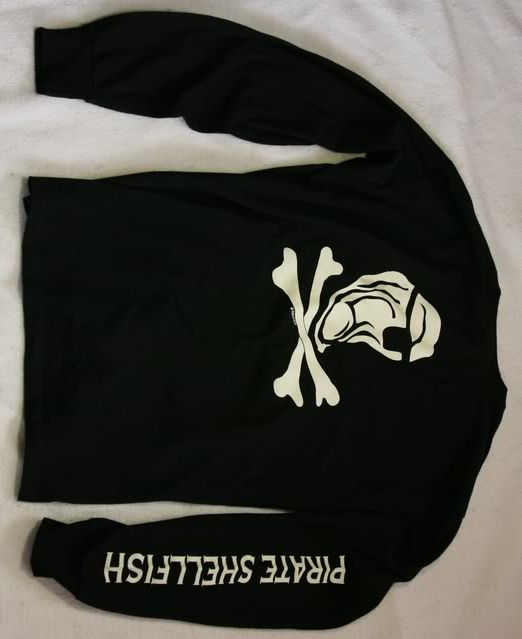
Get this great t-shirt and more from 826 Valencia:

Get this one and much more from Cafe Press:

Monday, November 10, 2008
Wednesday, November 05, 2008
How blue are we really?
I came across the site of Dr. Mark Newman, a physics professor at the University of Michigan, while searching for some state-by-state data on the election. He has some interesting maps that have been transformed to try to get a better visual picture of the geography of the election results. For example, below is a "cartogram" that has resized each state based on its population and then colored with the infamous red or blue. Dr. Newman delves even further on his site by coloring individual counties various shades on the blue-purple-red continuum. It's an interesting set of images.


Tuesday, November 04, 2008
Need a beard?
 I've already got one, but for those facially-follicly-challenged you can now "grow" your own beard without all the itching or messy trimming while helping out some people in need. If you aren't so sure a beard is for you, you should know there are 10 Very Good Reasons to Grow a Giant Beard
Sunday, November 02, 2008
Planting a Meadow
The title is not a metaphor - I am actually planting an actual meadow. Well, attempting to plant an actual meadow. OK, attempting to plant a small meadow-like area.
Part of our backyard is a swath of land with a utilities easement on it - we own the land, but the gas company has access rights and nothing can be built there. Previous owners planted grass back there and, so I've heard, kept it mowed like a lawn. I haven't continued this practice since 1) I have no desire to spend the time and energy to mow more lawn, and 2) I like my yard to provide as many natural habitats as possible (and a mowed lawn ain't much of a natural habitat). I would love to naturalize this entire back lawn, but it is a pretty big space and would require more time/effort/money to remove the existing grass than I am willing/able to give. So this summer I decided to start small.
I chose a small (~400 ft2) area to work with, figuring I can expand things in subsequent years if this preliminary work goes well. I started this project back in June, when, after mowing the grass short, I covered the area with some nylon tarps. I kept these tarps in place from June until this weekend. By keeping the area covered during the entire growing season, keeping the sun out and the temperature up, I was hoping to kill both the existing grass and a decent percentage of the grass/weed seeds lying dormant in the soil.

I pulled the tarps up this weekend and, sure enough, all vegetation was dead:

After some raking and hoeing up of dead grass tussocks, the area was ready to be sown:

By sowing seeds now, in November, in New England, I am accomplishing a couple of things. First, the wildflower and grass seeds I sow now will already be in place in the spring, ready to germinate as soon as conditions are right - this should give them a leg up (or at least an even footing) with any weed seeds out there now and I won't have to worry about working around my schedule or the unpredictable spring weather to plant. Second, some native wildflower seeds require a period of cold dormancy before they will germinate - I could have put the seeds in the fridge for the next few months, but why bother when winter can do a better job for me?
I wanted to plant a meadow, not just a wildflower garden, so I ordered both wildflower and grass seeds. I also wanted to use as many native plants as I could. After some online research, I ended up with a native wildflower seed mix from American Meadows and a short prairie grass mix from Prairie Frontiers. I augmented these with some additional native wildflower seeds. I bought enough seed for approximately 1,000 ft2, figuring I'd use half of it this year and the other half for next year's expansion.

Following a technique I found online, I split the seed I was going to use this year into two parts and mixed each part with approximately 10 parts of clean sand, which makes sowing the light, small wildflower seeds much easier. After thoroughly mixing the seed and sand, I sowed 1 part over the entire plot moving east-west and then sowed the 2nd part going north-south, thereby minimizing bare/sparse areas. The last thing to do, which is oh so important (so I've read), was to compact the seeds into the soil to ensure good seed-soil contact. Since I don't own a grass roller, I spent a half hour or so stomping around the sown plot, making sure my footprints covered every square inch of the ground.

Now I just sit back, enjoy the rest of the fall and winter, hope the birds don't eat too many of the newly sown seeds, and keep my fingers crossed for successful germination. I'll keep everyone posted.
Wildflowers sown:
Aquilegia canadensis (Eastern Red Columbine)
Asclepias incarnata (Red Milkweed)
Asclepias tuberosa (Butterfly Weed)
Aster novae-angliae (New England Aster)
Baptisia australis (Wild/False Blue Indigo)
Chamaecrista fasciculata (Partridge Pea)
Coreopsis lanceolata (Lance Leaf Coreopsis)
Eupatorium fistulosum (Joe Pye Weed)
Eupatorium maculatum (Spotted Joe Pye Weed)
Gaillardia pulchella (Indian Blanket)
Heliopsis helianthoides (Ox-Eye Sunflower)
Liatris spicata (Blazing Star)
Lobelia cardinalis (Cardinal Flower)
Lupinus perennis (Wild Perennial Lupine)
Monarda fistulosa (Wild Bergamot)
Oenothera biennis (Evening primrose)
Penstemon digitalis (Beard Tongue)
Rudbeckia hirta (Black-eyed Susan)
Rudbeckia submentosa (Sweet Coneflower)
Rudbeckia triloba (Brown-eyed Susan)
Salvia azurea (Tall Blue Pitcher Sage)
Solidago rigida (Rigid Goldenrod)
Solidago speciosa (Showy Goldenrod)
Grasses sown:
Andropogon scoparius (Little Bluestem)
Bouteloua curtipendula (Side Oats Gramma)
Bouteloua gracillis (Blue Gramma)
Koeleria cristata (Prairie June Grass)
Sporobolus heterolepis (Prairie Dropseed)
Part of our backyard is a swath of land with a utilities easement on it - we own the land, but the gas company has access rights and nothing can be built there. Previous owners planted grass back there and, so I've heard, kept it mowed like a lawn. I haven't continued this practice since 1) I have no desire to spend the time and energy to mow more lawn, and 2) I like my yard to provide as many natural habitats as possible (and a mowed lawn ain't much of a natural habitat). I would love to naturalize this entire back lawn, but it is a pretty big space and would require more time/effort/money to remove the existing grass than I am willing/able to give. So this summer I decided to start small.
I chose a small (~400 ft2) area to work with, figuring I can expand things in subsequent years if this preliminary work goes well. I started this project back in June, when, after mowing the grass short, I covered the area with some nylon tarps. I kept these tarps in place from June until this weekend. By keeping the area covered during the entire growing season, keeping the sun out and the temperature up, I was hoping to kill both the existing grass and a decent percentage of the grass/weed seeds lying dormant in the soil.

I pulled the tarps up this weekend and, sure enough, all vegetation was dead:

After some raking and hoeing up of dead grass tussocks, the area was ready to be sown:

By sowing seeds now, in November, in New England, I am accomplishing a couple of things. First, the wildflower and grass seeds I sow now will already be in place in the spring, ready to germinate as soon as conditions are right - this should give them a leg up (or at least an even footing) with any weed seeds out there now and I won't have to worry about working around my schedule or the unpredictable spring weather to plant. Second, some native wildflower seeds require a period of cold dormancy before they will germinate - I could have put the seeds in the fridge for the next few months, but why bother when winter can do a better job for me?
I wanted to plant a meadow, not just a wildflower garden, so I ordered both wildflower and grass seeds. I also wanted to use as many native plants as I could. After some online research, I ended up with a native wildflower seed mix from American Meadows and a short prairie grass mix from Prairie Frontiers. I augmented these with some additional native wildflower seeds. I bought enough seed for approximately 1,000 ft2, figuring I'd use half of it this year and the other half for next year's expansion.

Following a technique I found online, I split the seed I was going to use this year into two parts and mixed each part with approximately 10 parts of clean sand, which makes sowing the light, small wildflower seeds much easier. After thoroughly mixing the seed and sand, I sowed 1 part over the entire plot moving east-west and then sowed the 2nd part going north-south, thereby minimizing bare/sparse areas. The last thing to do, which is oh so important (so I've read), was to compact the seeds into the soil to ensure good seed-soil contact. Since I don't own a grass roller, I spent a half hour or so stomping around the sown plot, making sure my footprints covered every square inch of the ground.

Now I just sit back, enjoy the rest of the fall and winter, hope the birds don't eat too many of the newly sown seeds, and keep my fingers crossed for successful germination. I'll keep everyone posted.
Wildflowers sown:
Aquilegia canadensis (Eastern Red Columbine)
Asclepias incarnata (Red Milkweed)
Asclepias tuberosa (Butterfly Weed)
Aster novae-angliae (New England Aster)
Baptisia australis (Wild/False Blue Indigo)
Chamaecrista fasciculata (Partridge Pea)
Coreopsis lanceolata (Lance Leaf Coreopsis)
Eupatorium fistulosum (Joe Pye Weed)
Eupatorium maculatum (Spotted Joe Pye Weed)
Gaillardia pulchella (Indian Blanket)
Heliopsis helianthoides (Ox-Eye Sunflower)
Liatris spicata (Blazing Star)
Lobelia cardinalis (Cardinal Flower)
Lupinus perennis (Wild Perennial Lupine)
Monarda fistulosa (Wild Bergamot)
Oenothera biennis (Evening primrose)
Penstemon digitalis (Beard Tongue)
Rudbeckia hirta (Black-eyed Susan)
Rudbeckia submentosa (Sweet Coneflower)
Rudbeckia triloba (Brown-eyed Susan)
Salvia azurea (Tall Blue Pitcher Sage)
Solidago rigida (Rigid Goldenrod)
Solidago speciosa (Showy Goldenrod)
Grasses sown:
Andropogon scoparius (Little Bluestem)
Bouteloua curtipendula (Side Oats Gramma)
Bouteloua gracillis (Blue Gramma)
Koeleria cristata (Prairie June Grass)
Sporobolus heterolepis (Prairie Dropseed)
Saturday, October 25, 2008
In which Milan Lucic makes another appearance...
The Red Sox may be done for the year, but the Bruins are just beginning. Second year winger, Milan Lucic, is fast becoming a fan favorite here. Here's yet another reason why...(and once again, more intelligent, and less violent, blogging will resume shortly)
UPDATE: As if on cue, Lucic scored his first career hat trick in a win over Atlanta this weekend just hours after I mentioned to my brothers that it would be great if he could combine his hard hits (and fists) with more goals, a la Cam Neely.
UPDATE: As if on cue, Lucic scored his first career hat trick in a win over Atlanta this weekend just hours after I mentioned to my brothers that it would be great if he could combine his hard hits (and fists) with more goals, a la Cam Neely.
Wednesday, October 22, 2008
Symposium on Marine Renewable Energy
 Here's an interesting event taking place on campus this week (that I just found out about) - the 7th Marine Law Symposium on Thursday and Friday, Oct. 23 and 24, will focus on developing a framework for off-shore renewable energy.
This month, developing that framework will be the focal point when domestic and international scientists, business leaders and policymakers – including U.S. Senators Jack Reed and Sheldon Whitehouse, Rhode Island Gov. Donald Carcieri and a host of others – converge at Roger Williams University on Oct. 23-24 to find real-world solutions for tackling the legal, economic and policy challenges of the nascent marine renewable energy industry.
At the law school’s 7th Marine Law Symposium, this cross-disciplinary gathering of experts will grapple with the “how” of developing offshore energy resources, addressing concrete ways to support the burgeoning marine renewable energy business market, while attempting to reconcile a tangle of local, state, federal and public interest needs related to the protection, conservation and management of valuable marine resources.
Although registration for the event is closed, it is going to be streamed live at mms://streamer.rwu.edu/marinelaw and apparently there is going to be some live blogging of the event.
Perhaps I'm not in the loop as much as I would like to be, but I'm amazed that I didn't hear about this event until today. In fact, the only reason I heard of it at all is because an email went out to everyone concerning the parking ban in effect for the event! In any case, this is an important topic, especially for coastal areas, so hopefully something good comes of the symposium.
Saturday, October 18, 2008

Friday, October 17, 2008
Thursday, October 16, 2008
It's all woo to me
I got an email today via the "All-Faculty" listserv inviting everyone to the Fall Faculty Lecture. The lecture's title is "Eggtopia". Here's the complete description that came in the email:
I think I'll skip this one.
The transformation of energy into animate matter seems to occur generally within a container of some sort, a membrane, a pouch, a seed, or a shell. An egg is arguably the most pristine archetypal form among all receptacles within which life is engendered. Created at the inception of life, this completely sealed form vibrates with a latency manifest in its aura of impeccable silence. Even when an egg is broken and deserted by the life it once hosted, its inner depths seem to continue to ring with the memory of the transformative miracle, which took place within.
I think I'll skip this one.

Wednesday, October 15, 2008
I love this photo

courtesy of the Natural History Museum in London's upcoming exhibit (via Karen at the Beagle Project)
Tuesday, October 14, 2008
Data don't lie
More proof that we really are animals.

from Miller G, Tybur J, Jordan, B. 2007. Ovulatory cycle effects on tip earnings by lap dancers: economic evidence for human estrus? Evol. Hum. Behav. 28(6): 375-381.
from Miller G, Tybur J, Jordan, B. 2007. Ovulatory cycle effects on tip earnings by lap dancers: economic evidence for human estrus? Evol. Hum. Behav. 28(6): 375-381.
Chocolate Molluscs
 What do you get the molluscophile in your life? Chocolate oysters from the Wellfleet Candy Company, of course! Molded from a real Wellfleet oyster, these gourmet chocolates are the latest rage in invertebrate haute cuisine.
I haven't had one of these yet, but the Boathouse, Mayo Beach, and West Side varieties sound delicious.
Math problem help
Looking for some general help on a math/probability problem. At one point I probably knew how to figure this out. Perhaps I should still know, but I can't seem to get it. I'm looking for a general way to figure out the following type of problem...
Given an infinitely (sufficiently) large population of marbles of which 10% are green and 90% are blue, what is the probability of picking 10 marbles of which exactly 3 are green?
I know the chance of picking one green marble is 0.1, and I know that the chance of picking 3 green marbles in a row is 0.001 (0.1 x 0.1 x 0.1). But I'm confused when it comes to figuring in that order is unimportant and that a finite number of marbles is being picked - clearly the chance of picking exactly 3 green marbles in 10 tries is different from picking exactly 3 green marbles in 100 tries. Any help? In the end I'd like to generalize the process - given a population of which X% are a given kind, what is the chance of subsampling exactly Y individuals in Z tries.
Thanks in advance...
Given an infinitely (sufficiently) large population of marbles of which 10% are green and 90% are blue, what is the probability of picking 10 marbles of which exactly 3 are green?
I know the chance of picking one green marble is 0.1, and I know that the chance of picking 3 green marbles in a row is 0.001 (0.1 x 0.1 x 0.1). But I'm confused when it comes to figuring in that order is unimportant and that a finite number of marbles is being picked - clearly the chance of picking exactly 3 green marbles in 10 tries is different from picking exactly 3 green marbles in 100 tries. Any help? In the end I'd like to generalize the process - given a population of which X% are a given kind, what is the chance of subsampling exactly Y individuals in Z tries.
Thanks in advance...
Tuesday, October 07, 2008
SEA
As Rick made perfectly clear in my last post, I am unable to embed this nice little video from Sea Education Association. So instead, go check it out on their own site and see what a cool program it is.
Thursday, October 02, 2008
Wednesday, October 01, 2008
Generation K
It seems that parents who had girls born in 1990 were fascinated with the letter K. My roster for introductory biology this year includes:
Krysten
Katelyn (#1)
Katelyn (#2)
Kathryn (#1)
Kathryn (#2)
Kelsey
Kelilah
Kellie
Kasey
That's over 50% of the women in the class. 'K' isn't supposed to be a popular letter. In fact, it's the 21st most frequent letter in the English language (only ahead of 'J', 'X', 'Q', and 'Z'). It's worth 5 points in Scrabble! How am I supposed to learn who's who?
Krysten
Katelyn (#1)
Katelyn (#2)
Kathryn (#1)
Kathryn (#2)
Kelsey
Kelilah
Kellie
Kasey
That's over 50% of the women in the class. 'K' isn't supposed to be a popular letter. In fact, it's the 21st most frequent letter in the English language (only ahead of 'J', 'X', 'Q', and 'Z'). It's worth 5 points in Scrabble! How am I supposed to learn who's who?
Friday, September 26, 2008
Moray Mystery
Rick at MBSL&S has a very interesting post about the mysterious deaths of dozens of moray eels in the Antilles. As much as I would rather he didn't have to write about such an event, he does a great job of relaying the real-world issues and science at hand. Go check it out - it's a good, yet unfortunate, read.
Thursday, September 25, 2008
Batten down the hatches
(Apparently I linked to an image that gets updated, so this post makes less sense now...)
This could get a little choppy...

This could get a little choppy...

Friday, September 19, 2008
200 years too late?
What type of Pirate am I? You tell me...
(a bottle of rum raised to Kate/Dorid for this)

What kind of pirate am I? You decide!
You can also view a breakdown of results or put one of these on your own page!
Brought to you by Rum and Monkey
(a bottle of rum raised to Kate/Dorid for this)
Tenacious
I found this little snake in my backyard this afternoon. I'm not exactly sure what it is, but at only about 8 inches long, it must have been literally 1,000s of times smaller than me. Did it care? Did it quickly slither away upon being discovered? Uh, no. Gotta respect that.


Wednesday, September 17, 2008
Fits two people? Really?
I meant to post this photo weeks ago, after our D.C. vacation, but had forgotten about it until now.
Here's Jack peering into the bathysphere on display at the National Geographic Society:

Here's Jack peering into the bathysphere on display at the National Geographic Society:

Tuesday, September 16, 2008
Does Sarah Palin know the difference between icing and offsides?
Granted, Jack has only been playing hockey for a year now. Still, Linda is technically a "hockey mom", so this is entirely appropriate (and funny)
Just what I always wanted...
I'm looking for someone to help me bankroll a purchase. I figure if we each go in for half, we can figure out how to split the usage throughout the year - perhaps switch off every three months? Serious inquiries only please.
Saturday, September 13, 2008
I thought pirates did everything...
I'm not entirely sure about the validity of the title, but I'm thinking this children's book should be added to our home library.
Friday, September 12, 2008
"...set an open course for the virgin sea"
 |
2008 - 2009 ANNOUNCEMENTSEA is now accepting applications for the 2008-2009 academic year. Sea Education Association now offers three unique opportunities for undergraduates to spend a semester studying the oceans in the world-renown oceanographic community of Woods Hole, MA and aboard one of our modern sailing research vessels during an oceanic passage in the Atlantic or Pacific Ocean. SEA Semester: Ocean Exploration - This long-standing, innovative program offers students of all majors a multidisciplinary approach to studying the world's oceans from scientific, maritime cultural, and modern seafaring perspectives. Celestial navigation, meteorology, seamanship, oceanographic sampling techniques and research, and maritime history, literature and policy comprise the core curriculum. SEA Semester: Documenting Change in the Caribbean - Humanities, Environmental Studies, Geography and Social Sciences students are prepared for an extraordinary project-based academic experience. Few regions have seen such enormous changes in the last five centuries as the islands in the Caribbean Sea. Today, there is a dynamic mix of cultures and biota in the islands that bears little resemblance to the world encountered by Christopher Columbus. Students explore how we can document these changes using maps and charts, historical documents, commercial records, harbor pilots, species surveys, and the literature of Caribbean people from both the Colonial and post-Colonial periods. SEA Semester: Oceans & Climate - For advanced science students. This program focuses on the importance of the equatorial Pacific to the global carbon cycle, and culminates in a trans-equatorial research cruise from either Mexico to Tahiti or Tahiti to Hawaii. SEA faculty and visiting researchers from across the country engage students in oceanography, ocean policy and the operation a sailing research vessel. www.sea.edu |
Tuesday, September 09, 2008
Too soon to worry? part 2
Not only is Rick still incommunicado, but now Kevin Z. has gone strangely quiet...Should we start organizing a search party yet?
Thursday, September 04, 2008
Too soon to worry?
It's been a week since Rick posted anything over at MBSL&S. I'm starting to fear the worst...
Spin it 'round and 'round
Had to steal this post from Dale over at Meming of Life. The hypocrisy revealed here is dumbfounding.
Friday, August 22, 2008

Hulkamania?
So, I'm eating breakfast at the hotel in D.C. last week and I see on CNN (or MSNBC or Fox or *insert cable news channel*) that there was going to be an "evangelical rally" on the Mall that day. Turns out The Call was in town. Great.
So, the kids and I take the metro down to the Mall and sure enough we're bombarded by pamphleteers as we leave the metro stop. I managed to fend off the hoard without taking a single "You're going to burn in hell" flyer/newspaper/brochure. As we move away from the crowd I see a monstrosity of a stage set up by the Capitol - it looked like a Def Leppard concert (no offense to Def Leppard) - and we hear someone on stage yelling and carrying on about something. Honestly, I have no idea what the guy was saying, but the tone and rhythm sent chills down my spine - it's hard to explain, but it was some combination of anger, insanity, and overacting (I hate to suggest this, but check out the video on the right side of the Call's website I linked to above to hear what I mean). I suppose, unsurprisingly, evangelical is the best word to describe it. The guy could have been reading directly from Isaac Newton's Principia and it would have sounded just as scary-insane.
Actually, now that I think about it, the whole thing reminded me of something like this
So, what did the kids and I do? Walked straight across the Mall to the Museum of Natural History, of course, and took part in, among many other things, the Mammal Family Reunion.
So, the kids and I take the metro down to the Mall and sure enough we're bombarded by pamphleteers as we leave the metro stop. I managed to fend off the hoard without taking a single "You're going to burn in hell" flyer/newspaper/brochure. As we move away from the crowd I see a monstrosity of a stage set up by the Capitol - it looked like a Def Leppard concert (no offense to Def Leppard) - and we hear someone on stage yelling and carrying on about something. Honestly, I have no idea what the guy was saying, but the tone and rhythm sent chills down my spine - it's hard to explain, but it was some combination of anger, insanity, and overacting (I hate to suggest this, but check out the video on the right side of the Call's website I linked to above to hear what I mean). I suppose, unsurprisingly, evangelical is the best word to describe it. The guy could have been reading directly from Isaac Newton's Principia and it would have sounded just as scary-insane.
Actually, now that I think about it, the whole thing reminded me of something like this
So, what did the kids and I do? Walked straight across the Mall to the Museum of Natural History, of course, and took part in, among many other things, the Mammal Family Reunion.


Wednesday, August 13, 2008
D.C. Vacation
 The whole fam damily is headed to D.C. for a few days of vacation before the school year starts up again. Here's a short list of things we'll hopefully be getting to:
I'm open to other suggestions if you've got them (remember, we'll be dealing with a 4- and 7-year old). Em heard from a friend who heard from a friend that the Spy Museum was fun - anyone have first-hand experience and care to corroborate this?


Tuesday, August 12, 2008
Home grown

Our second (and last) "Sugar Baby" watermelon from the garden. The first was picked too early. This one was excellent even though it could have ripened another couple of days I think - except for the fact that some critter (squirrel? chipmunk?) was starting to nibble on the rind. Better to eat it a bit early than risk losing it completely!
Friday, August 08, 2008
Friday Dial Stopper - Anniversary Edition
Tomorrow is Linda's and my 10-year wedding anniversary. Yes, I said 10 years. We've actually known each other for 16 years - since our first year at Bowdoin. In 16 years, we've helped each other through the good and the bad of our undergraduate years, med/graduate school in Iowa (yes, I said, Iowa), residency, two kids, living on the Hopi Indian Reservation, my numerous "career" changes, two George W. Bush terms (no good, all bad), and countless family crises (large and small, real and imagined) and celebrations (often one and the same depending on your point of view). We drive each other crazy, we keep each other sane. If that makes sense to you, you "get it", much like Billy Idol...
Ti amo, mia lumaca!
Ti amo, mia lumaca!
|
Thursday, August 07, 2008
That's a lot of gorillas!
In some exciting conservation news that almost slipped me by (a hearty thanks to "the Naner" for pointing it out to me), researchers have discovered a new population of critically-endangered western lowland gorillas in the Republic of Congo. The estimate of 125,000 individuals (!), based on the number of "nests" observed in the 47,000 km2 area, is more than double the previous estimate for the number of these gorillas in the wild.
At first I thought the 125,000 number must be a mistake - I would have thought finding 30 gorillas was a big deal. But then I read that these gorillas were found in the swamps of equatorial Africa in a remote part of the Congo, so I can understand why they hadn't been found before. Just thinking about their location gives me malarial chills...
Read more here...
Watch a video of the gorilla discovery here...
At first I thought the 125,000 number must be a mistake - I would have thought finding 30 gorillas was a big deal. But then I read that these gorillas were found in the swamps of equatorial Africa in a remote part of the Congo, so I can understand why they hadn't been found before. Just thinking about their location gives me malarial chills...
Read more here...
Watch a video of the gorilla discovery here...
Tuesday, August 05, 2008
Not your ordinary mollusc
While going through my regular evening ritual of perusing the sites on my blogroll (I always start at the bottom and work my way up for some reason - I don't really know why), I came across the latest post by Emile over at The World We Don't Live In. This post is about the ever-so-rare phenomenon of vertebrates mimicking invertebrates. Now, while that is an interesting topic in its own right, what struck me as absolutely fascinating was the mention of a creature I had no idea even existed - the Indonesian mimic octopus, Thaumoctopus mimicus. (note: the creature is absolutely fascinating, not the fact that I had not heard of it - though I am surprised that such a critter had escaped my attention until now).
The video below does a good job of showing off this incredible quick-change artist. I'm starting to see why so many people think molluscs are so damn cool.
The video below does a good job of showing off this incredible quick-change artist. I'm starting to see why so many people think molluscs are so damn cool.
Friday, August 01, 2008
Friday Dial Stopper: Poster Printing Edition
Well, here I sit finishing up the poster printing I started yesterday. Of course, the process isn't frustration-free today either:
1) I met the IT guy at the room so he could let me in and log me onto the computer. He shows up and says "I hope the door isn't locked, that's the one key I don't have". Wah!? Now remember, this is the same guy that let me in yesterday (he had a key then), the same guy I talked to on the phone 15 minutes ago and who told me to meet him here so he could unlock the door for me, and the same guy who called security yesterday to come and lock up the room (oh, just to cover all bases, this is the same room as it was yesterday). Of course the friggin' room is locked. As my grandmother says (surprisingly) "Jesus, Mary and Joseph!" I shouldn't be surprised though since this is also the same guy who was "hoping" no one needed the regular printer this summer.
2) The IT guy finds someone with the key. Once inside I realize that the roll of paper I left on the printer is no longer there - it's been swapped out with smaller, cheaper stuff. My roll is nowhere in the room. WTF!! Luckily, the guy with the key had some ideas where it might be and after searching through about 5 different rooms we found it in a storage closet on the other side of the building. So much for being out of here in a couple of hours.
So, today's dial stopper is fitting. Just change the words in the chorus from 'I' to 'IT' (as in Information Technology) and it's perfect:
Addendum: 1:30pm - Three posters (from the same lab) failed to include a faculty co-author. Guess who's reprinting three posters?
1) I met the IT guy at the room so he could let me in and log me onto the computer. He shows up and says "I hope the door isn't locked, that's the one key I don't have". Wah!? Now remember, this is the same guy that let me in yesterday (he had a key then), the same guy I talked to on the phone 15 minutes ago and who told me to meet him here so he could unlock the door for me, and the same guy who called security yesterday to come and lock up the room (oh, just to cover all bases, this is the same room as it was yesterday). Of course the friggin' room is locked. As my grandmother says (surprisingly) "Jesus, Mary and Joseph!" I shouldn't be surprised though since this is also the same guy who was "hoping" no one needed the regular printer this summer.
2) The IT guy finds someone with the key. Once inside I realize that the roll of paper I left on the printer is no longer there - it's been swapped out with smaller, cheaper stuff. My roll is nowhere in the room. WTF!! Luckily, the guy with the key had some ideas where it might be and after searching through about 5 different rooms we found it in a storage closet on the other side of the building. So much for being out of here in a couple of hours.
So, today's dial stopper is fitting. Just change the words in the chorus from 'I' to 'IT' (as in Information Technology) and it's perfect:
|
Addendum: 1:30pm - Three posters (from the same lab) failed to include a faculty co-author. Guess who's reprinting three posters?
Thursday, July 31, 2008
While I'm blogging about sports...
Please, oh, please, let Brett Favre be traded to the Chicago Bears...
...it would so much fun to see Gibbon Jockey's reaction...
...it would so much fun to see Gibbon Jockey's reaction...
Manny Be Gone
Warning: non-Boston sports-fans and those who haven't been following the Manny Ramirez soap opera may want to skip this post.
Thankfully, Manny Ramirez is leaving Boston. I wish it hadn't come to this, but he has become a major pain in the ass over the past few weeks - getting into fights with teammates, knocking down elderly club assistants, refusing to play, making up injuries, saying that Boston doesn't deserve a player like him, etc, etc. All because he really didn't want the Sox to pick up a $20 million option for next year (don't you hate it when someone wants to pay you $20 million a year?). Manny being Manny just went too far.
I always kinda liked the guy - a big goofball who could hit the crap out of a baseball - but with the way he's been acting lately (like one of my kids when they were 2 and were told they couldn't have ice cream) I'm happy to see him go. Looks like the Sox are getting a decent player in Jason Bay in return, but we'll see (and really, at this point, I don't really care). Everyone on the team has to feel better right now - especially Tito (Terry Francona, the team manager).
The only downside to this whole thing is that my 4-year old son, Jack, lost it when he heard the news (we were listening to the radio waiting for Emma to get home from camp). Tears, sobbing, pure uncontrollable (and inconsolable) emotion. I didn't know he was so attached to Manny. I don't even want to think about how he is going to react when the same fate befalls his favorite player, Jason Varitek. He's going to be absolutely crushed. But maybe Manny's departure will help soften the blow - Jack won't be so blindsided by the fact that this happens.
Anyways, I am 100% ready for the Manny-less era to begin. Good luck, LA! Repeat after me, it's just Manny being Manny...
Thankfully, Manny Ramirez is leaving Boston. I wish it hadn't come to this, but he has become a major pain in the ass over the past few weeks - getting into fights with teammates, knocking down elderly club assistants, refusing to play, making up injuries, saying that Boston doesn't deserve a player like him, etc, etc. All because he really didn't want the Sox to pick up a $20 million option for next year (don't you hate it when someone wants to pay you $20 million a year?). Manny being Manny just went too far.
I always kinda liked the guy - a big goofball who could hit the crap out of a baseball - but with the way he's been acting lately (like one of my kids when they were 2 and were told they couldn't have ice cream) I'm happy to see him go. Looks like the Sox are getting a decent player in Jason Bay in return, but we'll see (and really, at this point, I don't really care). Everyone on the team has to feel better right now - especially Tito (Terry Francona, the team manager).
The only downside to this whole thing is that my 4-year old son, Jack, lost it when he heard the news (we were listening to the radio waiting for Emma to get home from camp). Tears, sobbing, pure uncontrollable (and inconsolable) emotion. I didn't know he was so attached to Manny. I don't even want to think about how he is going to react when the same fate befalls his favorite player, Jason Varitek. He's going to be absolutely crushed. But maybe Manny's departure will help soften the blow - Jack won't be so blindsided by the fact that this happens.
Anyways, I am 100% ready for the Manny-less era to begin. Good luck, LA! Repeat after me, it's just Manny being Manny...
Research poster frustration (take 3)
 Here's yet another chapter in the continuing saga of the large format poster printer I have the "privilege" of having access to.
Next Monday there is a conference co-hosted by RI-INBRE and RI-EPSCoR, two federally-funded state programs that, among many other things, provide support to undergraduates to do research. This conference consists of poster presentations for all the Summer Undergraduate Research Fellows (SURFs) from both programs throughout the state. As such, I am printing 10 posters for the SURFs here at RWU.
Not too bad, right? Each takes about 15 minutes or so to print, so I block off a few hours and give myself another day just in case anything goes awry. Am I prescient or what...
1) Poster files were due in to me by 10 a.m. this morning. How many did I have by 10 a.m.? Exactly 1. This was expected of course so not too big a deal.
2) The one laptop that is reserved for use with the large-format poster printer is kept in the Dean's office (this way we can maintain strict control over who uses the plotter - we don't want just anyone trying to use it and end up f-ing it up). However, the Dean is not here today. Neither is his secretary. The other secretary in the building doesn't have a key to his office. Luckily, security does and happily opens the door for me (wonder if the Dean knows about this).
3) The printer sits in a little room off the back of a computer lab. I have a key that opens up both the computer lab and the little room in the back. So, I unlock the computer lab and attempt to unlock the room in the back. My key doesn't fit. I try again and again and again, thinking it's just a bit sticky. Nope. No good. My key clearly does not go with this lock. Another call to security...
4) Security shows up. Long story short...their keys don't work either. WTF!?!? Security calls the locksmith. Turns out that the lock has been changed and the only folks with a key are over in IT. Apparently they're using the room for the storage of new PCs until they get a chance to swap out a bunch of old ones. Security bids me adieu and wishes me good luck. Great.
5) I call IT. Finally I get connected to someone with the key. I tell him what I need and he says...nothing. Just silence on the other side. Then I get a "Hmmmm. Huh. Ahhhhh. Can I call you back?" Sure. Why should I have expected a simple, "OK, I'll be right there"?
6) He calls back. I can't get access to the printer. I repeat, I cannot get access to the printer. Turns out the printer has been taken offline, moved to the back of the room and buried behind boxes of new PCs. It is literally inaccessible. Apparently, IT had been (direct quote here) "hoping that no one would need the printer this summer". Wah? Hoping? Other than IT (and the locksmith I guess) no-one knew this was happening. They didn't tell (or better, ask) anyone. They just were hoping it would be OK. Wow.
Everything is not lost however. The guy from IT has given me access to the computer lab in the School of Engineering. There's an older large format printer over here that I am using...once I changed the paper, figured out the proper settings, and fought with the paper loader because the roll I have is too thick so the rollers get jammed. But I'm printing now and, knock-on-wood, everything looks good.
And I remembered rubber bands this time!
Tuesday, July 29, 2008
The shoe fits...
(Hat tip to Kevin Z)

My Liberal Identity:
You are a Reality-Based Intellectualist, also known as the liberal elite. You are a proud member of what’s known as the reality-based community, where science, reason, and non-Jesus-based thought reign supreme.
Take the quiz at www.FightConservatives.com
Friday, July 25, 2008
Marine bio Camp - day 6 recap
Well, this year's Marine Biology Camp came to a close with a whale watching excursion with Capt. John Boats out of Plymouth, MA. Although our chances of seeing anything seemed slim with the heavy fog rolling in, our luck was good once we hit Stellwagen Bank and the fog cleared. Highlights from the the trip:
It was an intense week - I feel like we did an entire semester of a Marine Bio lab/field course in one week. I think I'll go to bed now and sleep for about three days!
- Saw five humpbacks up close, including two cow-calf pairs, as well as a couple of minke whales and a fin whale off in the distance
- One of the humpback whales we saw was Salt, the first humpback to be given a name some 30+ years ago, and her new calf, Sanchal .
- Great bubble net feeding beahvior
- Best of all, Sanchal gave us a show with a "spinning head breach" right in front of the bow of the boat. This was the first time I had ever seen a breach and was as amazing as I thought it would be!
It was an intense week - I feel like we did an entire semester of a Marine Bio lab/field course in one week. I think I'll go to bed now and sleep for about three days!
Thursday, July 24, 2008
Marine bio Camp - day 5 recap
Today's Itinerary:
Morning Session
Trawling on the 54' fishing vessel, the Captain Bert - students got to see the deployment of a smallish otter trawl and learn some fish biology while examining the haul;
Our catch included fluke, flounder, lobstahs, sea robins, scup/porgies, and squid;
Observe fluke dissection - examine internal anatomy and stomach contents (two recently eaten scup);
Afternoon Session
Winkler titrations of light/dark bottles from yesterday;
determine and graph primary productivity (gross and net) and respiration rates for surface and deep water;
Evening Lecture
Marine Mammals, given by yours truly (why me? cause our resident marine mammologist is on sabbatical and I lost the coin flip; thank goodness for wikipedia!)
Morning Session
Trawling on the 54' fishing vessel, the Captain Bert - students got to see the deployment of a smallish otter trawl and learn some fish biology while examining the haul;
Our catch included fluke, flounder, lobstahs, sea robins, scup/porgies, and squid;
Observe fluke dissection - examine internal anatomy and stomach contents (two recently eaten scup);
Afternoon Session
Winkler titrations of light/dark bottles from yesterday;
determine and graph primary productivity (gross and net) and respiration rates for surface and deep water;
Evening Lecture
Marine Mammals, given by yours truly (why me? cause our resident marine mammologist is on sabbatical and I lost the coin flip; thank goodness for wikipedia!)
Wednesday, July 23, 2008
Marine bio Camp - day 4 recap
Today's Itinerary
Morning session
Take RWU boats out for plankton sampling - one boat deploys a 150μm zooplankton net, the other deploys a 20μm phytoplankton net;
Using Van Dorn bottle, collect water samples and set-up primary productivity analysis (using the light/dark bottle technique);
In lab, use microscopes to examine the plankton samples - sketch and ID five phytoplankton and five zooplankton;
use spectrophotometers to measure chlorophyll concentration in samples filtered yesterday;
Afternoon session
Head to Fogland Beach for some fish seining along the shore and salt marsh;
Evening Lecture
Fish Biology
Highlight of the Day
Catching a 20-inch striped bass in the beach seine
Lowlights of the Day
1) Lion's mane stings
2) For tomorrow's Winkler titrations I wondered if I should use glass or plastic graduated cylinders. Are the high schoolers careful enough for the glass ones? I don't know...they're pretty fragile...and tippy (the cylinders, not the kids!)...oh what the hell, let them use the good stuff. Any bets on what I did while setting up? I decided to go with plastic.
Morning session
Take RWU boats out for plankton sampling - one boat deploys a 150μm zooplankton net, the other deploys a 20μm phytoplankton net;
Using Van Dorn bottle, collect water samples and set-up primary productivity analysis (using the light/dark bottle technique);
In lab, use microscopes to examine the plankton samples - sketch and ID five phytoplankton and five zooplankton;
use spectrophotometers to measure chlorophyll concentration in samples filtered yesterday;
Afternoon session
Head to Fogland Beach for some fish seining along the shore and salt marsh;
Evening Lecture
Fish Biology
Highlight of the Day
Catching a 20-inch striped bass in the beach seine
Lowlights of the Day
1) Lion's mane stings
2) For tomorrow's Winkler titrations I wondered if I should use glass or plastic graduated cylinders. Are the high schoolers careful enough for the glass ones? I don't know...they're pretty fragile...and tippy (the cylinders, not the kids!)...oh what the hell, let them use the good stuff. Any bets on what I did while setting up? I decided to go with plastic.
Tuesday, July 22, 2008
Marine bio Camp - day 3 recap
Today's Itinerary:
Morning session
take RWU's two small boats (a 19' Lema Skiff and a 29' Master Marine) out on the Bay;
on one boat - take CTD and Secchi disk readings from three different stations; collect surface, mid-column, and "deep" water samples using a Van Dorn bottle (for chlorophyll analysis back in the lab);
on 2nd boat - deploy Van Veen Grab and small otter trawl, identify and discuss critters found
Afternoon session
discuss productivity, photosynthesis, and ways of measuring both;
process water samples collected in morning - for each sample, filter 1L through 0.5μ membrane, place membrane filter in 10ml acetone to extract chlorophyll, let sit overnight (will quantify chlorophyll spectrophotometrically tomorrow);
discuss what characteristics make a good graph;
create depth profiles using CTD data from morning (salinity, temperature, and dissolved oxygen vs depth);
interpret depth profiles and relate to the geography of the Bay;
Evening Lecture
Phytoplankton, primary productivity, and marine invertebrates (characteristics of major phyla) - presented by our two senior undergraduate camp assistants
Issue of the Day
Lost a kid. OK, not really, but one kid did decide that he hated the camp so much he didn't want to stay. So, his dad came by this evening, picked him and his stuff up, and took him home. Oh well. Maybe he was expecting dolphins and sharks or something.
Morning session
take RWU's two small boats (a 19' Lema Skiff and a 29' Master Marine) out on the Bay;
on one boat - take CTD and Secchi disk readings from three different stations; collect surface, mid-column, and "deep" water samples using a Van Dorn bottle (for chlorophyll analysis back in the lab);
on 2nd boat - deploy Van Veen Grab and small otter trawl, identify and discuss critters found
Afternoon session
discuss productivity, photosynthesis, and ways of measuring both;
process water samples collected in morning - for each sample, filter 1L through 0.5μ membrane, place membrane filter in 10ml acetone to extract chlorophyll, let sit overnight (will quantify chlorophyll spectrophotometrically tomorrow);
discuss what characteristics make a good graph;
create depth profiles using CTD data from morning (salinity, temperature, and dissolved oxygen vs depth);
interpret depth profiles and relate to the geography of the Bay;
Evening Lecture
Phytoplankton, primary productivity, and marine invertebrates (characteristics of major phyla) - presented by our two senior undergraduate camp assistants
Issue of the Day
Lost a kid. OK, not really, but one kid did decide that he hated the camp so much he didn't want to stay. So, his dad came by this evening, picked him and his stuff up, and took him home. Oh well. Maybe he was expecting dolphins and sharks or something.
Monday, July 21, 2008
Marine bio Camp - day 2 recap
Itinerary:
kayak in Ninigret Pond;
explore the salt marsh, tidal flats, eel grass beds, sandy beach;
search for, find, and identify critters, discuss their ecology/natural history;
discuss sedimentation, local geology, glacial past, anaerobic decomposition, hydrogen sulfide production;
visit rocky intertidal zone at Beavertail State Park;
discuss important physical and biological factors at play here;
examine zonation;
search for, find, and identify critters;
compare and contrast with sandy beach environment;
Problems encountered:
Shuttle bus with students taking the long way around, getting stuck in morning rush-hour traffic;
kayak outfitter unable to unlock kayaks -> go out and rent bolt cutters -> cut lock;
kid from CA forgetting his parent-signed kayaking release form;
RWU shuttle failing to return to pick us up to take us to the rocky intertidal (they didn't see the second destination on the shuttle request form);
hung around kayak center parking lot for a couple of hours waiting for RWU security to "do their best to get someone out to pick us up";
had approximately 40 minutes at rocky intertidal;
one bloody shin and one smashed toe (neither mine);
At least it didn't rain on us. And I didn't lose anyone.
kayak in Ninigret Pond;
explore the salt marsh, tidal flats, eel grass beds, sandy beach;
search for, find, and identify critters, discuss their ecology/natural history;
discuss sedimentation, local geology, glacial past, anaerobic decomposition, hydrogen sulfide production;
visit rocky intertidal zone at Beavertail State Park;
discuss important physical and biological factors at play here;
examine zonation;
search for, find, and identify critters;
compare and contrast with sandy beach environment;
Problems encountered:
Shuttle bus with students taking the long way around, getting stuck in morning rush-hour traffic;
kayak outfitter unable to unlock kayaks -> go out and rent bolt cutters -> cut lock;
kid from CA forgetting his parent-signed kayaking release form;
RWU shuttle failing to return to pick us up to take us to the rocky intertidal (they didn't see the second destination on the shuttle request form);
hung around kayak center parking lot for a couple of hours waiting for RWU security to "do their best to get someone out to pick us up";
had approximately 40 minutes at rocky intertidal;
one bloody shin and one smashed toe (neither mine);
At least it didn't rain on us. And I didn't lose anyone.
Sunday, July 20, 2008
Kayaks, Winklers, and Otter Trawls....oh my!
Today was the start of the RWU Summer Marine Biology Camp, a one-week, intensive, hands-on marine biology experience for high school kids. And I'm running it. Or rather, I'm co-running it with Scott Rutherford, our resident geologist. Today, 15 students arrived with their parents (well, technically, 14 arrived with parents, 1 flew in solo from CA), got settled into their dorm rooms, and got oriented to the program. Our week is packed full - so much so that I think I may not see my wife and kids until Saturday. Sorry, Linda! Here's a quick run-down of some of the things happening the week:
- kayaking at Ninigret Pond - we'll explore this coastal lagoon (aka salt pond) and associated habitats (salt marsh, sand/mud flats, barrier beach, eel grass beds), keeping an eye out for as many critters as we can
- tidepooling at Beavertail State Park - a great, wave-swept, rocky intertidal area - perfect for observing zonation
- using a small, hand-deployable CTD to create water column profiles in Mt. Hope Bay (a part of Narragansett Bay)
- using Van Dorn bottles to collect water samples at various depths for chlorophyll analysis
- phyto- and zooplankton tows and then some microscope work to see what we caught
- investigation of primary productivity using light and dark bottles and Winkler titrations (if I can find the burets!)
- fish seining at a local beach - we should find plenty of silversides, mummichog, and sheepsheads, among other things
- deploying an otter trawl off the 54' fishing-cum-research vessel, the Captain Bert - I am really looking forward to this one as I have never done or seen this before - we should pull up a good variety of critters, hopefully with minimal harm/bycatch
- whale watching on Stellwagen Bank - a good way to end the week.

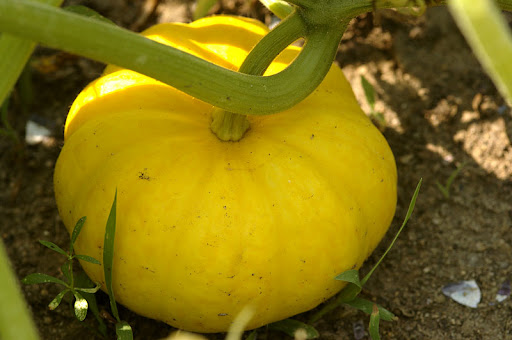
In the garden
Inspired by the wonderful photos by Kathy over at Skippy's Vegetable Garden, here are a few pics of what's growing over here. (Oh, and for you marine-only types who may not otherwise be interested in my terrestrial biota, check out the first two pics and notice the shells of Mytilus edulis from the Coast of Maine compost I used this year.)